Famous Structures Built with the Help of Pneumatic Tools

Key Takeaway Pneumatic tools played a critical role in enhancing speed, precision, and efficiency during the construction of iconic landmarks. From skyscrapers like the Empire State Building and Burj Khalifa to monumental projects like the Channel Tunnel and Hoover Dam, pneumatic tools such as rivet guns, drills, jackhammers, and impact wrenches were essential in handling […]

Famous Structures Built with the Help of Pneumatic Tools Read More »
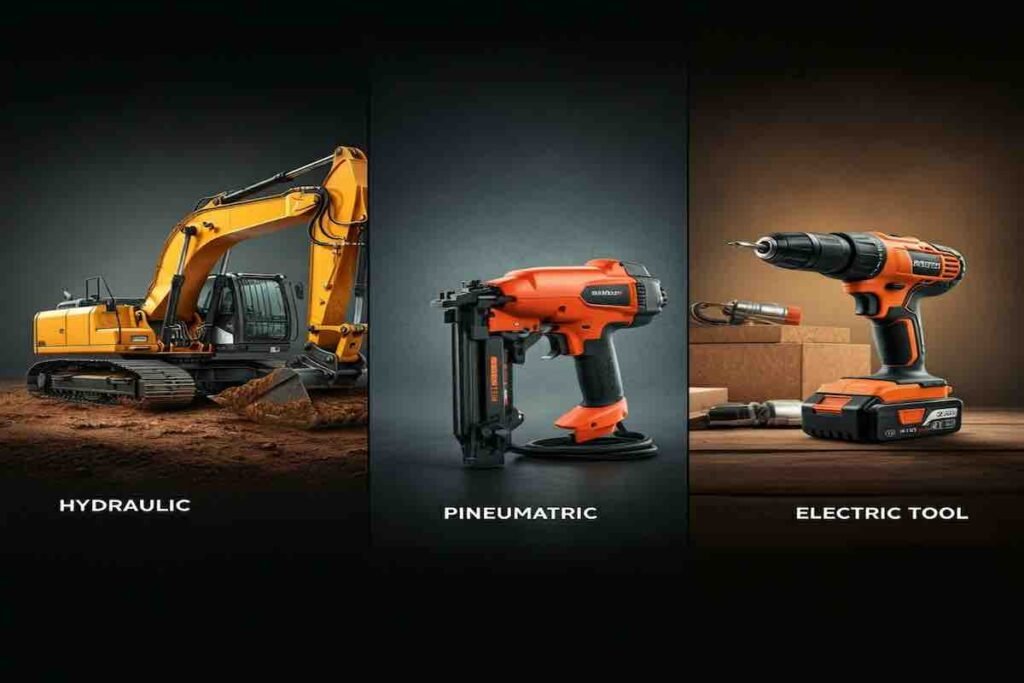
Pneumatic vs. Hydraulic vs. Electric: Understanding Different Power Sources in Tools

In industrial and professional-grade tools, three primary power sources dominate the market: pneumatic (air-powered), hydraulic (fluid-powered), and electric. Each of these power sources has its unique characteristics, advantages, and limitations, making them suitable for different applications and environments. Understanding the differences between these power sources is crucial for selecting the right tools for specific jobs,

Pneumatic vs. Hydraulic vs. Electric: Understanding Different Power Sources in Tools Read More »

10 Surprising Industries That Rely Heavily on Pneumatic Tools

When we think of pneumatic tools, our minds often jump to construction sites, auto repair shops, or manufacturing plants. However, the versatility and efficiency of air-powered tools have led to their adoption in a wide range of unexpected industries. From delicate artistic work to heavy-duty industrial applications, pneumatic tools have found their place in sectors

10 Surprising Industries That Rely Heavily on Pneumatic Tools Read More »

The Evolution of Pneumatic Tool User Interfaces 

The Evolution of Pneumatic Tool User Interfaces 

Key Takeaway  The evolution of pneumatic tool user interfaces has transformed how operators interact with their tools, focusing on improved ergonomics, intuitive controls, and enhanced safety features. Modern interfaces now offer customizable settings, digital displays, and smarter feedback systems that allow users to adjust performance in real-time. This shift not only increases efficiency but also

The Evolution of Pneumatic Tool User Interfaces  Read More »

Pneumatic Tools in Aerospace: Meeting Strict Industry Standards

Pneumatic Tools in Aerospace: Meeting Strict Industry Standards

Key Takeaway  Pneumatic tools are indispensable in the aerospace sector, providing the precision, reliability, and strength needed to meet rigorous industry standards. Their lightweight design, high torque output, and consistent performance make them ideal for delicate assembly, maintenance, and repair tasks. As aerospace continues to demand tighter tolerances and enhanced safety, pneumatic tools are evolving

Pneumatic Tools in Aerospace: Meeting Strict Industry Standards Read More »

The Sound of Power: Acoustic Engineering in Pneumatic Tool Design

The Sound of Power: Acoustic Engineering in Pneumatic Tool Design

Key Takeaway  Acoustic engineering plays a vital role in modern pneumatic tool design, significantly reducing noise levels without compromising performance. By incorporating advanced noise-dampening technologies and materials, manufacturers are enhancing workplace safety and comfort, addressing regulatory requirements, and improving overall tool efficiency. This focus on sound reduction not only protects workers from long-term hearing damage

The Sound of Power: Acoustic Engineering in Pneumatic Tool Design Read More »

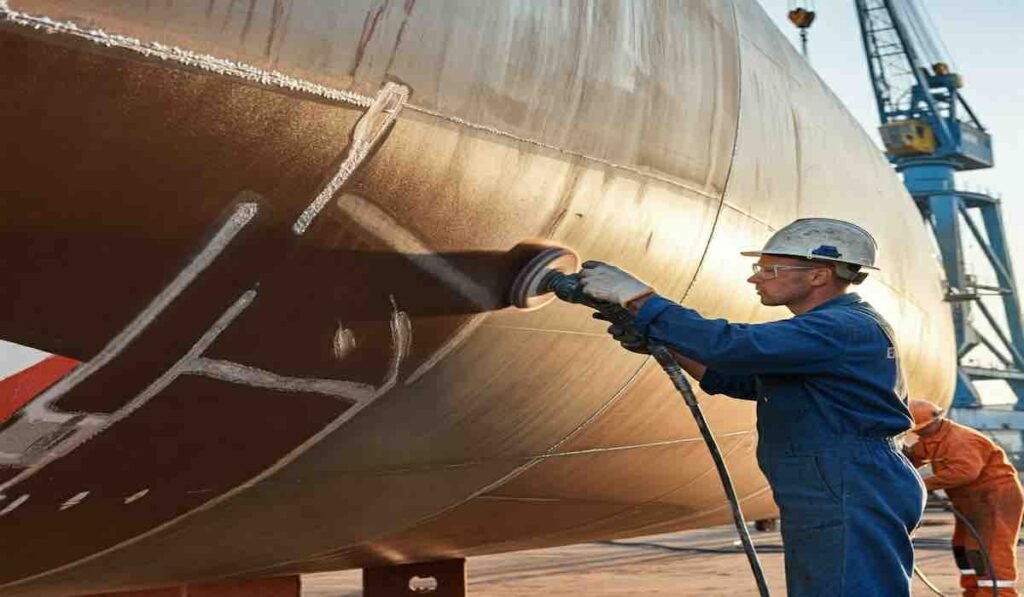
Pneumatic Tools in Shipbuilding: Challenges and Innovations

Pneumatic Tools in Shipbuilding: Challenges and Innovations

Key Takeaway  Pneumatic tools play a crucial role in the shipbuilding industry, providing the power and precision needed for heavy-duty tasks such as cutting, drilling, fastening, and welding. The main challenges include ensuring tool durability in harsh marine environments and maintaining performance in large-scale operations. However, innovations like ergonomic designs, improved corrosion resistance, and enhanced

Pneumatic Tools in Shipbuilding: Challenges and Innovations Read More »

Pneumatic Tools and Robotics: The Future of Automated Manufacturing

Pneumatic Tools and Robotics: The Future of Automated Manufacturing

Key Takeaway  In automated manufacturing, robotics require tools that can perform repetitive tasks with consistent force and accuracy. Pneumatic tools, such as drills, grinders, and impact wrenches, are ideal for these applications due to their lightweight design, high torque output, and durability. When combined with robotic arms or automated systems, pneumatic tools can perform tasks

Pneumatic Tools and Robotics: The Future of Automated Manufacturing Read More »

The Role of Pneumatic Tools in Historic Preservation and Restoration

The Role of Pneumatic Tools in Historic Preservation and Restoration

Key Takeaway  Pneumatic tools are essential in historic preservation and restoration due to their ability to deliver powerful yet precise performance. Their reduced vibration and enhanced control make them ideal for working on fragile materials, ensuring the preservation of structural integrity while increasing efficiency. These tools allow restoration professionals to meet the unique challenges of

The Role of Pneumatic Tools in Historic Preservation and Restoration Read More »

Pneumatic Tools in Food Processing: Ensuring Safety and Efficiency

Pneumatic Tools in Food Processing: Ensuring Safety and Efficiency

Key Takeaway  Pneumatic tools offer significant advantages in the food processing industry by ensuring safety, hygiene, and efficiency. Their spark-free and non-electrical design reduces contamination risks, while their durable and low-maintenance nature boosts productivity. These tools help food processing businesses meet stringent safety standards while optimizing operations for cost-effectiveness and reliability.  Introduction  Pneumatic tools play

Pneumatic Tools in Food Processing: Ensuring Safety and Efficiency Read More »